Check out our White Paper Series!
A complete library of helpful advice and survival guides for every aspect of system monitoring and control.
1-800-693-0351
Have a specific question? Ask our team of expert engineers and get a specific answer!
Sign up for the next DPS Factory Training!
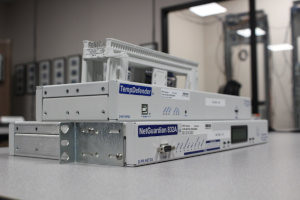
Whether you're new to our equipment or you've used it for years, DPS factory training is the best way to get more from your monitoring.
Reserve Your Seat TodayDPS solutions enable detailed visibility through third-party NOC
| Field | Details |
|---|---|
| Industry | Rural Telecommunications |
| Company Type | Non-profit telephone cooperative |
| Geography/Coverage | Southeastern Montana, northeastern Wyoming |
| Primary Challenge | Lacked specific alarm details from prior vendor |
| Solution Deployed | Third-party NOC with T/Mon and NetGuardians |
| Key Result | Precise alarm identification and faster response |
| Products Used | T/Mon NOC, NetGuardian RTUs, T/Mon SLIM |
Range Telephone Cooperative serves over 7,700 subscribers across eighteen exchanges in southeastern Montana and northeastern Wyoming. Founded in 1953, this non-profit cooperative partnered with DPS Telecom to deploy monitoring equipment through VisionNet's managed NOC service.
Range Telephone needed more precise control and visibility across their expanding network. Their previous vendor couldn't provide detailed information when network issues occurred. The cooperative received vague notifications that didn't specify the exact problem. As they continued growing, they needed specific alarm details to respond effectively and route resources efficiently.
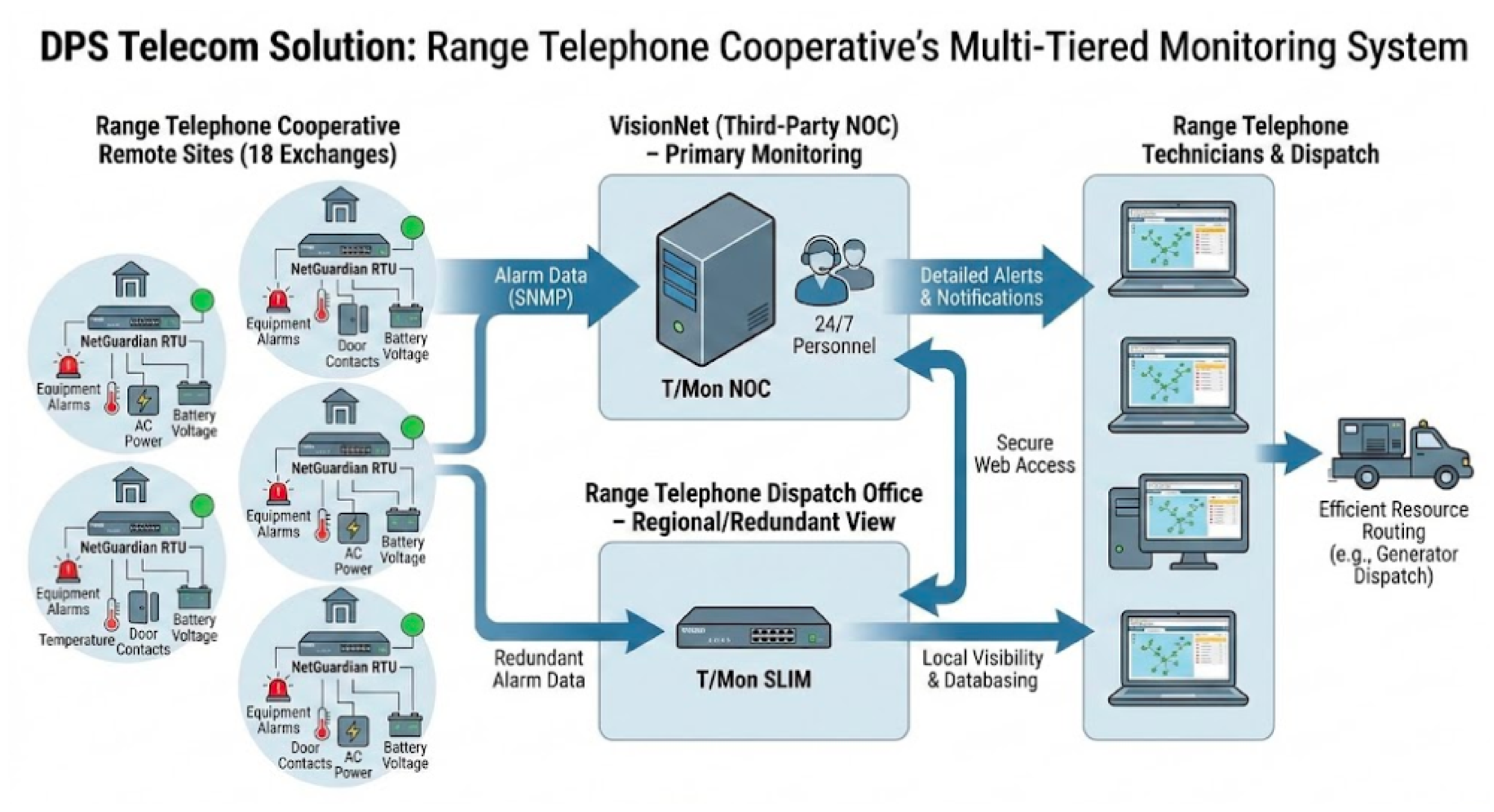
Range Telephone partnered with VisionNet, a third-party alarm management provider. VisionNet uses T/Mon NOC as its alarm collection platform. Range communicates with the T/Mon NOC through NetGuardian remotes deployed at their sites. This architecture delivers professional 24/7 monitoring without requiring internal NOC staffing.
VisionNet provides 24/7 monitoring with redundant equipment and facilities. This enables Range to focus on network expansion and service delivery without managing monitoring infrastructure or staffing a NOC.
Range Telephone now receives detailed information about every alarm. The central office can evaluate alarm severity immediately. Staff can log into NetGuardians and the T/Mon NOC through a secure web interface for additional detail. This visibility enables faster response and better resource allocation across their eighteen-exchange network.
| Outcome | Impact |
|---|---|
| Detailed Alarm Information | Specific problem identification versus vague alerts |
| 24/7 Professional Monitoring | Focus on growth without monitoring staff concerns |
| Extended Visibility | Door alarms, temperature, AC power, battery monitoring |
| Efficient Resource Routing | Generator dispatch based on actual site needs |
"We have made progress. Now we get a call and they can tell us exactly what the problem is," says Michael Tiday, Central Office Technician.
The NetGuardians monitor door alarms, temperature, AC power, and battery levels. Range's dispatch office routes generators to sites based on actual power needs. This saves time and expense while maintaining network reliability.
| Benefit | Description |
|---|---|
| Third-Party NOC Flexibility | Leverage professional monitoring without internal staffing |
| Detailed Alarm Data | Faster resolution with precise problem identification |
| Environmental Monitoring | Temperature, power, and security protection |
| Growth Without Compromise | Scale services while maintaining alarm visibility |
Want to learn how this architecture could work for your network? Contact our team for a consultation.
Dennis Cathey and Michael Tiday attended a DPS Factory Training event. They learned about the T/Mon SLIM, which enables regional NOC deployment at their dispatch office. The SLIM integrates seamlessly with VisionNet's T/Mon NOC.
"This puts us in a position where we can do our own databasing and things of that nature," says Michael. The T/Mon SLIM provides full visibility at the element-manager level. If communications to VisionNet's NOC fail, the SLIM maintains complete local monitoring capability.
The SLIM features a built-in web interface for alarm acknowledgment, history maintenance, and programming automatic corrections. "We didn't realize until this class what the NetGuardian can actually do," Michael noted. The full-featured NetGuardian allows remote monitoring and control through its web browser, plus terminal server functionality.
Multi-protocol platform for centralized network monitoring and management.
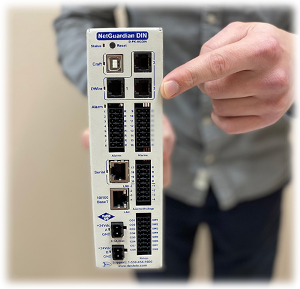
Remote units monitoring equipment status, environment, and site security.
Element-level master for small to medium networks, enables regional NOCs.
Third-party NOC providers use central alarm platforms like T/Mon to monitor your sites 24/7. Your remote sites report via RTUs to the provider's NOC. Trained personnel process alarms and notify you with detailed information. This provides professional monitoring without requiring internal NOC staffing or infrastructure investment.
NetGuardians monitor equipment alarms from your network infrastructure. They also track environmental conditions including temperature, humidity, and door contacts. Power monitoring covers AC status, battery voltage, and generator operation. This protects both revenue-generating equipment and the environment it operates in.
Yes. Range Telephone uses this approach with VisionNet NOC service plus T/Mon SLIM at their dispatch office. This creates redundancy and control. You can handle certain alarms internally while leveraging professional NOC services for comprehensive coverage. The architecture provides fault tolerance if either system experiences issues.
Detailed alarm data identifies exactly what failed, where, and why. You know the specific issue before dispatching technicians. This reduces unnecessary truck rolls and speeds restoration. During multiple simultaneous events, you can prioritize resources based on actual severity rather than investigating vague alerts.
DPS T/Mon and NetGuardian products use industry-standard protocols like SNMP. This ensures compatibility with third-party NOC providers. Many professional monitoring services use T/Mon as their platform due to its protocol flexibility, web interface, and database capabilities. The equipment integrates seamlessly with managed NOC architectures.
Whether you're evaluating managed NOC services or building internal monitoring, DPS provides the equipment that makes detailed alarm visibility possible. Our application engineers design solutions that fit your network architecture.
Or call us: 1-800-693-0351