Download our free Monitoring Fundamentals Tutorial.
An introduction to Monitoring Fundamentals strictly from the perspective of telecom network alarm management.
1-800-693-0351
Have a specific question? Ask our team of expert engineers and get a specific answer!
Sign up for the next DPS Factory Training!
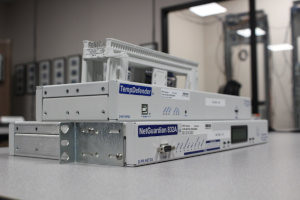
Whether you're new to our equipment or you've used it for years, DPS factory training is the best way to get more from your monitoring.
Reserve Your Seat Today
Chuck Thomas and Roberto Deleon solved their nagging legacy problems.
A major electrical utility needed to replace fragmented, incompatible legacy alarm monitoring and improve how technicians were notified and dispatched. Working with DPS Telecom, the utility deployed T/Mon LNX to consolidate multi-protocol alarms into one view and deliver smarter notifications to the right people.
| Quick Facts | Details |
|---|---|
| Industry | Electric utility |
| Company Type | Major electrical utility company delivering power for over 100 years |
| Generation Mix | Hydropower, coal, and natural gas |
| Service Territory | Serving more than 1.5 million people across more than 4,000 square miles |
| Primary Challenge | Disjointed legacy monitoring tools, incomplete visibility, and inadequate pager notification that created dispatch confusion |
| Solution Deployed | T/Mon LNX alarm monitoring and notification |
| Key Result | Centralized multi-protocol alarms on one screen, reduced dispatch confusion, and eliminated proprietary legacy systems |
| Products Used | T/Mon LNX |
Chuck Thomas and Roberto Deleon are Senior Communications Technicians at a major electrical utility company that has been delivering electrical power for over 100 years. The company generates power from a diverse mix of resources, including hydropower, coal and natural gas. Serving more than 1.5 million people, their service territory covers more than 4,000 square miles.
Existing Monitoring Solution Wasn't Getting the Job Done
The utility had been using incompatible legacy equipment for alarm monitoring, but they needed a more effective system. They required one solution capable of monitoring all their SNMP alarms, analogs, and proprietary protocols. With the legacy approach, different alarms were captured by different systems, making it difficult to operate from a single, consistent picture of network health.
Legacy System Caused Unnecessary Dispatch Confusion
These disjointed systems created avoidable workflow problems for the technicians, especially around notifications. Inadequate pager notification was a major issue. Their legacy system paged the full list of technicians whenever an alarm was triggered, which drove unnecessary dispatch confusion.
"We had to page 5 technicians and whoever was available was assigned the task," said Deleon. "This wasted valuable time and manpower."
"We have now dropped all of our proprietary legacy systems."
T/Mon Deployment Captures Array of Alarms on One System
To find a modern monitoring solution, the company contacted DPS Telecom. After researching their options, they deployed a T/Mon LNX alarm solution.
T/Mon LNX is designed to act as an alarm master for mixed infrastructure environments, consolidating disparate inputs into a single operational view so teams can make dispatch decisions faster and with better context. For this utility, T/Mon LNX brought key alarm sources together, including PBX and ASCII, which technicians valued as they worked to move beyond fragmented legacy monitoring tools.
"It was nice to see everything together in one place," said Thomas. "We have now dropped all of our proprietary legacy systems."
The Right Alarms for the Right People
A major improvement was intelligent paging. With T/Mon LNX, the team could route specific alarms to specific people instead of paging everyone for every event. "Now we have specific alarms for specific people," Deleon said.
"We are now able to monitor our whole network from one screen."
T/Mon LNX also supported pager and email alarm notifications, which reduced windshield time for technicians. Using T/Mon's descriptive alarm notifications, Deleon could make better dispatch decisions with fuller information when an alarm occurred.
If your organization is facing the same "multiple tools for multiple alarm types" problem, DPS Telecom typically recommends standardizing around an alarm master like T/Mon LNX so operators can correlate SNMP events, analog thresholds, and text-based alarm messages (such as ASCII feeds) in one workflow. This reduces the chance that important events are missed because they live in separate systems.
Full-Featured Monitoring System That's Equipped for the Future
T/Mon LNX's integrated multi-protocol support was appreciated by both Thomas and Deleon. "We are now able to monitor our whole network from one screen," Thomas said.
After deploying T/Mon LNX, both senior technicians recognized the practicality of monitoring their infrastructure regardless of manufacturer or protocol. As a result, they gained a full-featured monitoring system that can grow with future needs, and they achieved this without a forklift swapout of their legacy remotes.
Comprehensive Factory Training Ensures a Smooth Legacy Migration
Deleon and Thomas attended a regularly scheduled DPS Factory Training event to learn how to use T/Mon most effectively, including ASCII alarm parsing.
"The DPS team was more than willing to help with any questions we had," said Deleon. "They were really great."
Thomas also appreciated DPS's hands-on training and experienced instructors. "Bringing all our systems onto one screen will allow us to make the most informed decisions," said Thomas. "DPS really provided us with an insight into how to make the most of T/Mon."
For teams modernizing alarm management, DPS Telecom generally recommends starting with an alarm master from the T/Mon Master Station product family and building out integrations as needed. In mixed environments, this approach reduces operational risk because it lets you unify visibility while keeping existing remote equipment in service where appropriate.
Legacy environments often evolve into multiple monitoring silos where each system captures only certain alarm types. An alarm master like T/Mon LNX consolidates alarms and events into one operational view and one notification strategy, which simplifies dispatch decisions.
Instead of paging everyone for every event, T/Mon LNX can route specific alarms to specific people (or escalation groups). That reduces unnecessary pages and helps technicians focus on alarms they are responsible for.
In this case, the utility wanted one place to monitor SNMP alarms, analogs, and proprietary protocols, and the deployed system also brought in PBX and ASCII. Centralizing these sources helps operators understand what is happening without switching tools.
Not always. This deployment achieved a future-ready monitoring approach without a forklift swapout of legacy remotes, demonstrating that many modernization projects can be staged to preserve existing investments.
Alarm consolidation often includes integrating and normalizing different message formats (for example, ASCII alarm parsing). Hands-on training helps technicians configure, interpret, and route alarms correctly so the monitoring system delivers actionable information.
If you are managing a utility or critical infrastructure network and need to consolidate legacy alarm systems, improve paging workflows, or centralize multi-protocol visibility, DPS Telecom can help you plan a practical migration path with T/Mon LNX.
Get a Free Consultation or call 1-800-693-0351 to speak with a DPS Telecom expert about your project.