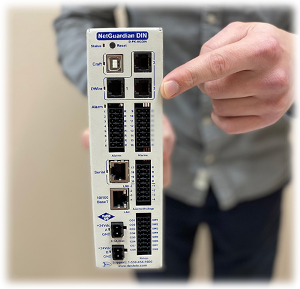
Download our free Monitoring Fundamentals Tutorial.
An introduction to Monitoring Fundamentals strictly from the perspective of telecom network alarm management.
1-800-693-0351
Have a specific question? Ask our team of expert engineers and get a specific answer!
Sign up for the next DPS Factory Training!
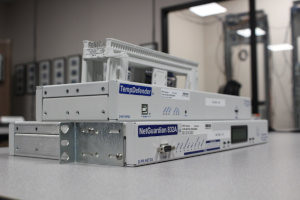
Whether you're new to our equipment or you've used it for years, DPS factory training is the best way to get more from your monitoring.
Reserve Your Seat TodaySoutheast Nebraska Communications (SNC) needed to retire a Nortel DMS 10 that was still acting as the only way to monitor critical contact-closure (discrete) alarms during an FTTH upgrade. By deploying DPS Telecom NetGuardian and TempDefender RTUs and later adding a T/Mon master station, SNC centralized alarm collection and simplified how technicians receive actionable alarm details.
| Industry | Telecommunications |
|---|---|
| Company Type | Third-generation, privately owned communications company |
| Geography / Coverage | Falls City, Nebraska and surrounding communities including Rulo, Stella, Shubert, Verdon, Salem, and rural areas |
| Primary Challenge | Replace DMS 10-based discrete contact-closure monitoring so the aging CO switch could be decommissioned |
| Solution Deployed | NetGuardian and TempDefender RTUs for alarm collection and notifications; later expanded with a T/Mon master station to centralize alarm management |
| Key Result | Removed reliance on the DMS 10 for alarm visibility and improved day-to-day alarm clarity and notification control |
| Implementation Timeframe | Phased deployment: RTUs first; T/Mon added the following year |
| Products Used | NetGuardian RTUs; TempDefender RTUs; T/Mon platform |
Southeast Nebraska Communications (SNC) is a third-generation, privately owned communications company that has provided local telephone services in Falls City and the surrounding area since 1906. The company offers local voice, long distance, internet services, Skitter TV, and bundle packages to customers in Falls City, Rulo, Stella, Shubert, Verdon, Salem, and surrounding rural areas.

Gary Cornely is the NOC Administrator at SNC.
"I'm in charge of all network systems in Falls City, Nebraska," Cornely said. "They hired me to do Fiber to the Home (FTTH) and upgrade their systems. I do anything IP. I'm also a tech, so I take calls and fix things that break."
When Cornely started at SNC, he faced a common telecom operations problem: an aging central office switch that could not be decommissioned because it was still performing a critical monitoring function.
"Originally, all our discretes were handled by a central office switch, the Nortel DMS 10," Cornely recalled. "As part of the FTTH project, we did not have a solution to effectively manage those discrete contact closures. We couldn't dismantle the switch until we had a solution."
In addition to blocking decommissioning plans, the DMS 10 provided limited alarm context. The team often had to take extra steps to understand what was happening and where to dispatch.
"When we were using the DMS 10. we got a phone call that said you had an alarm," he explained. "But you didn't get any detail until you actually dialed in."
SNC evaluated options for a monitoring approach that could handle a broad range of equipment and protocols and provide actionable alarm details to technicians. Their search led them to DPS Telecom.
"My boss had done a lot of research and DPS had come up," Cornely remembers. "That was my first project when I was hired. I looked at the DPS website and talked to (sales engineer) Ron Stover a couple of times. I became convinced pretty quickly that DPS was the only solution that brought it all together. This was what we needed to do."
At a technical level, SNC needed two capabilities:
DPS Telecom is designed for exactly this kind of transition - using RTUs such as NetGuardian and TempDefender to collect discrete inputs (and other telemetry where needed) and forwarding alarms to a central master station. This approach lets telecom operators retire legacy switch dependencies while improving alarm detail and visibility.
Cornely was particularly interested in a monitoring system that could consolidate equipment and protocols into a single operational picture.
"The number of different devices DPS equipment could talk to, collect from, figure out what to do with, and then send alerts and information," he said. "It just made a lot of sense."
SNC started its deployment with NetGuardian and TempDefender RTUs, configuring them to send notifications directly to technicians. Later, they expanded the system with a T/Mon master station to collect alarms from more equipment and centralize control over alarm notifications.
This phased approach is common when replacing legacy alarm paths:
For teams modernizing monitoring during network upgrades like FTTH, DPS Telecom typically reduces operational friction by making alarm points readable and actionable at the moment the alarm occurs, rather than requiring technicians to "dial in" to retrieve details after the fact.
The SNC team encountered a common operational risk: staff turnover can leave monitoring configurations hard to understand or maintain if knowledge is not documented and transferred.
"Unfortunately, the guy that got the most out of T/Mon left the company before he could show me how it all worked together," Cornely said. "That's why I came for a week of DPS training."
Free factory training at DPS HQ gave him a solid understanding of both T/Mon and his NetGuardian and TempDefender RTUs. This helped SNC rebuild internal knowledge of how alarms are collected, normalized, and routed to the right responders.
With a complete monitoring system now up and running, Cornely has confidence the solution can withstand future changes, including staffing transitions and unexpected equipment issues.
Key outcomes SNC achieved with DPS Telecom included:
For telecom NOCs, support quality matters most when a rare or high-impact alarm occurs. Cornely highlighted DPS Telecom's engineering-led support model.
To keep monitoring stable over time, SNC plans to continue using support from DPS HQ engineers when configurations need adjustment or when recovering from unexpected events.
A contact closure is a simple on/off electrical state (open/closed) used to represent alarms such as door open, generator run, high water, breaker trip, rectifier fail, or similar plant conditions. RTUs like NetGuardian are designed to collect these discrete points reliably.
In SNC's environment, the DMS 10 was still the only monitoring gear handling discrete alarm points. Until those alarm paths were migrated to an RTU-based monitoring approach, the switch could not be removed without losing visibility.
Standalone notifications can be effective at first, but a master station centralizes alarm routing rules, escalation policies, and maintenance. This helps reduce configuration sprawl as sites and alarm points expand.
RTUs collect alarms locally (discretes and other telemetry depending on configuration) and forward them to a central system for unified viewing and notification. In this project, SNC used RTUs first for direct alerting, then expanded to centralized alarm management through T/Mon.
Choose a system with clear configuration tools, maintainable alarm documentation, and strong vendor training and support. SNC addressed a knowledge gap by attending a week of DPS factory training.
At DPS, we receive many urgent quote requests after an earlier "Do Nothing" decision comes back to bite you. If you are planning a switch retirement, FTTH upgrade, or a monitoring refresh, it is usually easier to engineer the alarm migration before it becomes an emergency.
Call us. Chat with an expert for 10 minutes. We'll email you a detailed quote with a custom application drawing. We'll even include a summary of business benefits you can use to justify your project budget.
Call 1-800-693-0351 now for your quote
(or send us a quick online message instead)
Get a Free Consultation to talk through your own contact-closure migration, RTU selection, or T/Mon alarm master design with a DPS Telecom expert.