Download our free Monitoring Fundamentals Tutorial.
An introduction to Monitoring Fundamentals strictly from the perspective of telecom network alarm management.
1-800-693-0351
Have a specific question? Ask our team of expert engineers and get a specific answer!
Sign up for the next DPS Factory Training!
Whether you're new to our equipment or you've used it for years, DPS factory training is the best way to get more from your monitoring.
Reserve Your Seat Today
Pepco needed an expandable way to monitor a large and growing set of utility sites while improving fault tolerance at the master station level. With DPS Telecom NetGuardian remotes and a dual-redundant T/Mon NOC master station configuration, Pepco strengthened alarm visibility and recovery readiness.
| Industry | Electric utility |
|---|---|
| Company Type | Power provider serving businesses and communities |
| Geography/Coverage | Mid-Atlantic region, including Washington D.C. and Maryland |
| Primary Challenge | Scale site monitoring while improving alarm master station redundancy, and ensure staff can efficiently deploy and maintain the system |
| Solution Deployed | NetGuardian remotes feeding a T/Mon NOC master station, plus a second T/Mon NOC synchronized via the NRI software module; supported by a T/Mon Gold Plan maintenance agreement and DPS factory training |
| Key Result | A more reliable, expandable monitoring system with a fault-tolerant dual-master configuration and improved operator readiness |
| Products Used | NetGuardian 216, NetGuardian 832A G4, NetGuardian 832A G5, NetMediator, T/Mon NOC, NRI software module, T/Mon Gold Plan maintenance agreement |
Potomac Electric Power Company (Pepco) provides electricity to businesses and communities in the mid-Atlantic region, including Washington D.C. and Maryland. Pepco has a long operating history in the area and relies on monitoring and engineering practices that support reliable service.
Gloria Canales, an Operations Research Analyst in the engineering department, is involved with the management and monitoring of Pepco's extensive network. Working with DPS Telecom sales engineers, she deployed monitoring that was designed to be both reliable and expandable.
As Pepco expanded its monitoring footprint, the organization needed to do two things at once:
In parallel, Pepco needed to keep engineering staff effective on day-to-day monitoring tasks such as databasing, alarm presentation, and working with common protocols (including SNMP and ASCII text alarms).
Pepco built its monitoring around a large network of DPS Telecom NetGuardian units, then centralized alarm collection and operator workflow with a T/Mon NOC master station supported by a T/Mon Gold Plan maintenance agreement.
"We're going to be using the NetGuardian a lot..."
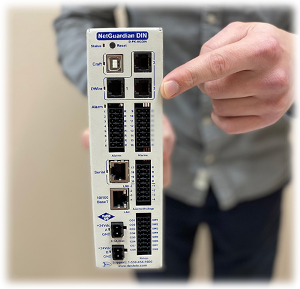
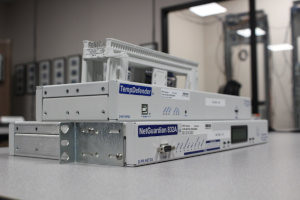
Previously, Pepco monitored their sites with a huge network of NetGuardians. This included the small NetGuardian 216, the full-featured NetGuardian 832A G4, and the TBOS-capable NetMediator.
From a system-design perspective, this architecture matches a common DPS Telecom approach for critical infrastructure monitoring:
For organizations scaling a distributed utility footprint, DPS Telecom typically recommends this RTU-to-master model because it supports standardized alarming across many locations while still allowing site-by-site expansion.
To create a redundant dual-master configuration, Canales deployed a second T/Mon NOC and the NRI software module. NRI synchronizes Pepco's twin T/Mon systems so that a backup is ready within seconds if the primary T/Mon fails.
This approach created a fault-tolerant system designed to quickly recover after hardware failures or natural disasters. For utility operations, dual-master readiness helps reduce the risk that a single point of failure at the monitoring center impacts alarm visibility.
Pepco continued expanding the remote monitoring layer with updated hardware. Canales also deployed the NetGuardian 832A G5, which offers a faster processor and more RAM for future firmware enhancements.
Canales was also interested in more advanced technology from DPS Telecom, including fiber interfaces. The NetGuardian 832A G5 has a 100BaseFX fiber interface option. In that configuration, the NetGuardian can deliver LAN to 3 external devices and is invulnerable to lighting and EMI over the fiber connection.
For critical facilities where EMI and lightning exposure are recurring concerns, DPS Telecom often recommends evaluating fiber uplinks and appropriate grounding/surge strategies as part of the overall monitoring and networking design.
"We're going to be using the NetGuardian a lot," Canales said.
Training key employees on monitoring systems can be expensive and time-consuming, especially when the environment includes both RTU configuration and centralized alarm management. Pepco's investment in a Gold Plan maintenance agreement entitled them to tuition-free seats at a regularly scheduled 4-day training session at DPS Headquarters in Fresno, California.
"By coming to class, I feel more comfortable. There's nothing that I can't handle..."
During their factory session, Pepco worked with instructors at DPS to get hands-on training. They learned how to install and maintain T/Mon and NetGuardians. They also received instruction on working with SNMP and ASCII text alarms.
"I feel like class was very hands-on. They give you an opportunity to do it yourself..."
As an Operations Research Analyst, it was essential for Canales to be fully educated. By attending the factory training, she learned what she needed to know and was impressed by the overall class experience.
"By coming to class, I feel more comfortable," Canales said. "There's nothing that I can't handle."
Something that surprised her was the amount of class materials provided. The user manuals and step-by-step workbooks supported a structured learning experience.
"DPS provided product user manuals but also a workbook for every day of class," Canales said. "That's something you can use to quickly find what you need."
She was also impressed by the number of hands-on class activities with real DPS equipment.
"I feel like class was very hands-on. They give you an opportunity to do it yourself," said Canales. "If you're a visual person, you can tell me, tell me, tell me, but you can skip something if you're just taking notes. When you do it yourself, you have to think a little bit more about what you have to do."
"It's really something to come to DPS and put faces to the names and say, 'OK, I can call this person and I know he's knowledgeable...'"
In addition to product installation and protocols, Canales appreciated learning special applications that made working with DPS products easier and more efficient. She discovered additional benefits that T/Mon offers, including auto-databasing ASCII, and she had a chance to familiarize herself with T/Mon hotkeys to speed up both databasing and monitoring.
Training onsite also presented an opportunity to meet the DPS team and learn who to call with questions. It made Canales familiar with the office support staff and technicians.
"It's really something to come to DPS and put faces to the names and say, 'OK, I can call this person and I know he's knowledgeable,'" Canales said. "It's great to come to DPS Factory Training."
A remote telemetry unit (RTU) collects alarms and telemetry at a site (for example, discrete contacts, analog values, and protocol-based status) and forwards those events to a central system. In Pepco's environment, NetGuardian devices served as the site-level collection and reporting layer.
Centralized alarm management helps operators view, acknowledge, and work alarms consistently across many sites. T/Mon NOC is designed to consolidate incoming alarms and support databasing and operational workflows as the monitored footprint expands.
Dual-master designs reduce reliance on a single monitoring server. In this case, Pepco used NRI to synchronize twin T/Mon systems, allowing the backup to be ready within seconds if the primary T/Mon failed.
SNMP is widely used for alarming and status from network-connected devices, while ASCII text alarms are common for legacy or serial-based interfaces. Pepco received hands-on instruction on working with both during DPS factory training.
Fiber connections can reduce susceptibility to lightning and EMI compared to copper Ethernet. Pepco evaluated the 100BaseFX fiber interface option on the NetGuardian 832A G5 for this reason.
If you are expanding utility or critical infrastructure monitoring and need scalable remote alarming with resilient central visibility, DPS Telecom can help you design the right NetGuardian and T/Mon architecture for your sites and operations team. Get a Free Consultation or call 1-800-693-0351 to speak with a DPS expert about your project.