Download our free Monitoring Fundamentals Tutorial.
An introduction to Monitoring Fundamentals strictly from the perspective of telecom network alarm management.
1-800-693-0351
Have a specific question? Ask our team of expert engineers and get a specific answer!
Sign up for the next DPS Factory Training!
Whether you're new to our equipment or you've used it for years, DPS factory training is the best way to get more from your monitoring.
Reserve Your Seat Today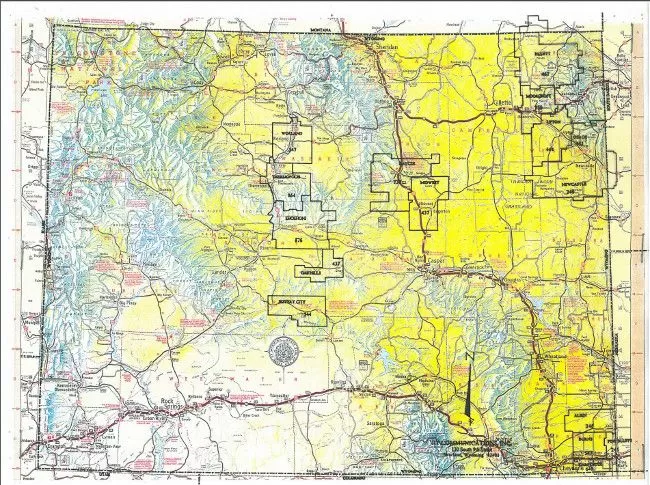
Rural telecom provider reduces all-day truck rolls with centralized alarm visibility.
| Industry | Rural Telecommunications Provider |
| Company Type | Regional Telecom Service Cooperative |
| Geography/Coverage | Central & Northeastern Wyoming |
| Primary Challenge | All-day truck rolls across remote territories |
| Solution Deployed | Centralized remote site alarm monitoring |
| Key Result | Reduced unnecessary truck rolls with visibility |
| Implementation Timeframe | 12-hour site upgrade |
| Products Used | T/Mon LNX, NetGuardian RTUs, Building Access |
RT Communications is a rural telecommunications provider serving central and northeastern Wyoming. Created by Range Telephone Cooperative's Board of Trustees, RT delivers high-speed internet, voice services, and business and residential phone systems. The company supports approximately 10,900 customers across a vast, sparsely populated service area.
Serving remote Wyoming communities means distance is a constant operational challenge. When alarms lack detail or visibility is limited, dispatching a technician can require an entire day just for travel. For a provider responsible for reliable phone service and 911 reporting, delayed diagnostics increase operational strain and public safety risk.
"A truck roll for RT can take all day, and that's just to get there. The tech then has to actually address the problem."
- Seth LaVine, IT Tech, RT Communications
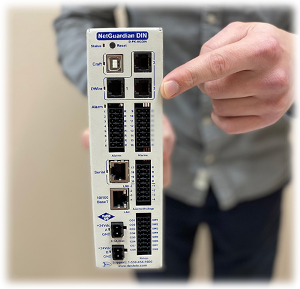
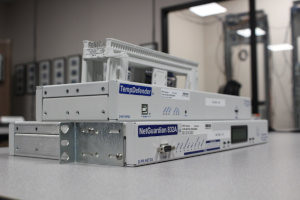
RT Communications deployed a centralized remote site monitoring solution from DPS Telecom to improve alarm visibility and reduce unnecessary dispatches. By integrating T/Mon LNX with NetGuardian RTUs and Building Access, RT gained detailed monitoring across distributed sites without replacing core infrastructure.
The solution supports monitoring for numerous alarm points across RT's network. It also enables secure electronic access to central offices and positions RT to expand into ASCII text-based alarm parsing for more granular diagnostics.
"The equipment that we put in in Jeffrey City went off without a hitch. It came right up, everything worked great."
- Seth LaVine, IT Tech, RT Communications
With centralized telecom monitoring in place, RT Communications improved visibility across its rural infrastructure. Detailed alarms enable smarter dispatch decisions, reducing unnecessary truck rolls and strengthening oversight of services that support 911 and Lifeline operations.
"Lifeline is a service we offer and it's the reason for the reliability in the system. To make sure that everything is up and running like it's supposed to - that's a critical operation."
- Seth LaVine, IT Tech, RT Communications
By centralizing alarm visibility and collecting detailed device-level data, providers can diagnose many issues remotely. This allows teams to determine whether a site visit is necessary before committing to long travel times across rural territories.
Rural telecom providers support emergency communications where delays can be catastrophic. Continuous monitoring ensures that infrastructure supporting Lifeline and 911 reporting remains operational and visible at all times.
ASCII text-based alarms provide more detailed information than summary major/minor alerts. They can identify specific failed components, such as a card inside a switch or router, enabling more precise dispatch decisions.
In RT Communications' Jeffrey City upgrade, monitoring equipment was installed and brought online in approximately one 12-hour day, including travel to the remote location.
Improve alarm visibility, reduce unnecessary dispatches, and strengthen public safety oversight across your remote telecom sites.