Download our free Monitoring Fundamentals Tutorial.
An introduction to Monitoring Fundamentals strictly from the perspective of telecom network alarm management.
1-800-693-0351
Have a specific question? Ask our team of expert engineers and get a specific answer!
Sign up for the next DPS Factory Training!
Whether you're new to our equipment or you've used it for years, DPS factory training is the best way to get more from your monitoring.
Reserve Your Seat TodayInterbel Telephone, a rural telecom serving northwestern Montana, needed dependable remote visibility into network and facility alarms across hard-to-reach sites. By standardizing on DPS Telecom NetGuardian RTUs and a T/Mon alarm monitoring system, Interbel improved alarm coverage and reduced unnecessary drive time.
| Industry | Rural telecommunications |
|---|---|
| Company | Interbel Telephone |
| Geography / Coverage | Northwestern Montana (large rural service area) |
| Primary Challenge | Maintain alarm visibility and reduce site visits in a low-density service area with long drives and difficult winter access |
| Solution Deployed | Remote alarming using NetGuardian 832A G5 RTUs feeding a T/Mon alarm monitoring system |
| Key Result | Better visibility into problems before dispatching technicians, helping reduce drive time to remote facilities |
| Products Used | NetGuardian 832A G5, T/Mon platform |
DPS Telecom Marketing Manager Andrew Erickson and Rob Little from Interbel spoke at the Remote Monitoring and Control Expo in Las Vegas, NV. Little shared common monitoring challenges faced by rural telcos, including Interbel.
Interbel Telephone covers a large rural area in northwestern Montana. Maintaining reliable service means keeping visibility on both network elements and critical environmental and power conditions at remote sites.
Little described several realities that shape how rural providers operate:
In some cases, reaching a site can require a snowmobile. For teams operating under these conditions, remote alarming is not optional - it is a practical way to decide when a truck roll is necessary and what tools or parts are needed before dispatch.
Interbel previously relied on alarms collected by a Lucent 5E switch.
"Our Lucent 5ESS switch used to collect alarms for the DDM2000 network we had going around our SONET rings. The switch itself had alarm points. We monitored the alarms right on it," said Little. "When we lost the 5ESS, we lost the alarms. We went to the MetaSwitch and had to pick up that functionality in our network with RTUs."
When a core platform change removes built-in alarm collection, rural carriers typically need a replacement approach that can:
Read more: InterBel Loses Alarming After 5ESS To Metaswitch Migration - T/Mon And NetGuardians Fill The Void.
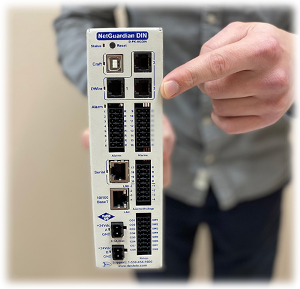
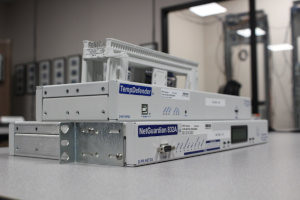
Interbel turned to DPS Telecom for help with remote monitoring. Interbel now uses NetGuardian 832A G5 RTUs along with a T/Mon alarm monitoring system to consolidate alarms from remote sites and network elements into an operations-friendly view.
In this type of deployment, NetGuardian RTUs are typically used at remote huts, cabinets, and central offices to gather local discrete and analog alarms, while also supporting network monitoring (such as SNMP) for connected IP equipment when applicable. T/Mon then centralizes these alarms, applies routing/escalation rules, and presents an operator view that helps NOC staff prioritize and respond.
Interbel monitors alarms including:
Read more: How Interbel Telephone Restored Alarm Visibility After Their Switch Upgrade.
For Interbel, remote monitoring provides better visibility into the problem before dispatching a technician and helps reduce the amount of drive time required to maintain service across a large rural territory.
By using DPS Telecom RTUs for local alarm collection and T/Mon for centralized alarm management, Interbel can keep awareness on both site conditions (environmental, power, and access) and key network equipment.
At the expo, Little shared practical priorities for building a monitoring system that holds up in rural conditions:
These points align with the way many operators deploy DPS Telecom solutions: use RTUs to collect the alarms you cannot afford to miss, add IP monitoring for connected devices, and centralize everything in T/Mon so alarms can be routed to the right people with clear context.
Read more: How Interbel Telephone Monitors Their 3 Fiber Rings And Plans To Control Door Locks Electronically
RTUs provide local alarm collection at remote facilities, so operations staff can see power, environmental, and access issues without visiting the site first. This is especially valuable when winter access or long drive times delay response.
If a legacy switch provided alarm collection, migrating away from it can remove a central source of telemetry. Adding RTUs restores that visibility by collecting the same types of contact closures and analog readings, plus additional monitoring for IP equipment as needed.
NetGuardian RTUs are commonly used to collect environmental alarms (temperature/humidity, smoke), power alarms (AC fail, fuses), access alarms (door), and telemetry like tank levels. They can also monitor many IP devices using SNMP where supported.
T/Mon centralizes alarms from multiple sites, presents an operator view, and supports alarm routing and escalation. This helps teams manage many remote locations consistently.
If you are upgrading network platforms, expanding rural coverage, or trying to reduce dispatch time with clearer alarming, DPS Telecom can help you design a monitoring solution that fits your sites and your operations workflow. Get a Free Consultation or call 1-800-693-0351 to speak with an expert about your project.