Check out our White Paper Series!
A complete library of helpful advice and survival guides for every aspect of system monitoring and control.
1-800-693-0351
Have a specific question? Ask our team of expert engineers and get a specific answer!
Sign up for the next DPS Factory Training!
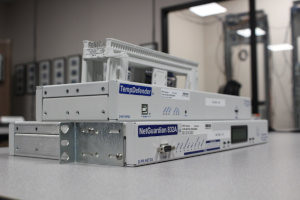
Whether you're new to our equipment or you've used it for years, DPS factory training is the best way to get more from your monitoring.
Reserve Your Seat Today
ATC Microwave, a subsidiary of Time Warner Cable, needed to stop critical alarms from being buried by nuisance notifications across its Washington statewide microwave network. By deploying a fleet of DPS Telecom KDA RTUs with DPM (Discrete Point Modules) and adding a T/Mon NOC, ATC improved alarm visibility so technicians could respond faster and keep sites from going dark.
| Industry | Telecommunications - common carrier microwave |
|---|---|
| Company | ATC Microwave (subsidiary of Time Warner Cable) |
| Geography / Coverage | Statewide microwave network in Washington |
| Primary Challenge | Nuisance alarms obscuring critical events; limited legacy telemetry; no generator status; one-way communications |
| Solution Deployed | RTU-based discrete alarming with alarm qualification and centralized alarm presentation in a NOC |
| Key Result | Filtered nuisance alarms, improved visibility and response, and helped keep remote sites online |
| Products Used | KDA RTUs, DPM (Discrete Point Modules), T/Mon NOC |
ATC Microwave operates a statewide common carrier microwave site network in Washington and has been in operation since the 1960's. Veteran employee Ralph Konshuk has been with ATC Microwave during most of that time, managing and supporting microwave communications across a large footprint of remote sites.
"We've operated between fifty and a hundred microwave sites," Konshuk said.
ATC's legacy monitoring equipment created a constant stream of nuisance alarms, making it difficult for technicians to quickly spot the alarms that actually required action. Door openings and closings generated alerts, while the legacy system lacked derived alarms and could not effectively filter out the noise.
This flood of low-value events increased the risk that critical alarms would be missed. It also slowed down triage because technicians had to work through a sea of notifications to find the events that mattered.
The Legacy Monitoring System Wasn't Cutting It...
On top of the nuisance-alarm problem, the legacy system did not provide generator status. "It had to be monitored manually," Konshuk said. "We used to watch it in the office when we were there."
The old telemetry system also provided only one-way communication and was deployed at three sites. "It just sent information one direction and it didn't even verify if it was received or not." In practice, that meant reduced confidence in alarms and limited ability to validate or troubleshoot remote conditions.
While Konshuk struggled with this outdated and unreliable legacy monitoring system, he knew this bare-bones visibility would not cut it for ATC.
Extreme Conditions at Their Remote Sites Made Windshield Time Expensive...
Many of ATC's sites were remote and exposed to cold, snowy conditions. With one-way communication and limited actionable alarm information, Konshuk and his staff spent significant time troubleshooting devices in the field. As troubleshooting consumed more time, windshield time became more expensive - especially at the most remote, snow-covered sites.
ATC needed a modern alarm monitoring approach that could qualify alarms, suppress noise, and provide better visibility into remote site conditions without exceeding budget. Konshuk initially explored a custom interface designed to bridge the existing legacy system and a web-based system, but the cost was "out of this world" for the scope required.
ATC Needed a Custom Solution That Wouldn't Break Their Budget
With cost being a major factor, Konshuk took a proactive approach and contacted DPS Telecom. In early discussions with DPS Applications Engineers, Konshuk focused on getting visibility where existing equipment could not deliver it.
Working with DPS, ATC deployed a fleet of KDA RTUs and DPMs (Discrete Point Modules) as part of a tailored solution to bring discrete alarming and monitoring into their remote microwave facilities.
For organizations modernizing remote microwave, cellular, and broadband infrastructure today, DPS Telecom commonly applies the same core principles used here: local RTU-based alarming at the site (for discrete conditions like door, generator, and equipment status) combined with centralized alarm management for actionable workflows. When an Ethernet/SNMP-based architecture is appropriate, DPS Telecom's RTU solutions and T/Mon alarm management are designed to scale from a handful of sites to large, multi-region networks.
What began as a deployment of RTUs at 10-12 sites expanded to over 20 sites. "The KDA and DPM remotes have performed flawlessly," Konshuk said. "And they give us excellent capacity for monitoring and control at our individual equipment facilities."
The New Fleet Of Advanced RTUs Filters Out Nuisance Alarms
By bringing more alarms in as discrete points and applying alarm qualification, ATC reduced false alarms triggered by the entry system. This allowed technicians to focus on real problems instead of repeatedly responding to pages generated by simple door events.
In general, DPS Telecom RTU deployments use on-site inputs (discrete and analog) to represent the true state of critical infrastructure. When those points are qualified and normalized before they reach the operator, alarm lists become significantly more actionable. This helps a NOC or operations team prioritize correctly, especially across large fleets of unmanned sites.
"A lot of our growth has occurred since the DPS system was put in..."
With discrete alarming in place, ATC was able to filter false alarms triggered by their entry system. Konshuk and his staff could respond rapidly without having to worry about nuisance alarms dominating the alert stream.
"DPS equipment has kept the sites from going dark," he said. After learning how to use alarm qualification times with DPS equipment, Konshuk knew his technicians would have their time protected from non-actionable pages.
Superior Visibility From T/Mon NOC Helps ATC's Network Grow...
With the success of the RTUs and their ability to effectively monitor ATC's remote sites, Konshuk took the next step and deployed a T/Mon NOC for centralized alarm presentation and operations. "We are very pleased with the presentation and capabilities of the T/Mon Master," said Konshuk. He quickly recognized a positive change in the network: "A lot of our growth has occurred since the DPS system was put in," he noted.
"I wish that all vendors support was as good as DPS..."
As a veteran of the telecommunications industry, Konshuk has dealt with many equipment vendors. The training, service, and support he received from DPS stood out. "DPS has the best customer and tech support of any vendor I have worked with in the twenty-five years I have been in the industry," said Konshuk. "Whenever any of our people have called for assistance, our needs were quickly taken care of. I wish that all vendors support was as good as DPS."
A nuisance alarm is a frequent, low-importance event (like a door contact toggling) that can overwhelm operators. Excessive nuisance alarms increase the risk that a critical event will be missed or responded to late.
Discrete inputs let you represent specific conditions (door open, generator running, rectifier fail) as clean on/off points. When combined with qualification timers, brief transitions can be ignored while true fault conditions are still escalated.
Alarm qualification time is a delay or persistence requirement before an alarm is reported. It helps suppress momentary events and reduces unnecessary pages, while still ensuring sustained problems are reported.
As the number of unmanned sites increases, centralized alarm presentation helps standardize workflows, prioritize responses, and create a single operational view of network health.
Look for modern monitoring that provides actionable alarms, the ability to qualify and route events, and reliable communication and management so operators can trust what they see and respond with confidence.
If you are dealing with nuisance alarms, limited visibility, or high windshield time across remote telecom sites, DPS Telecom can help you design a monitoring approach that fits your network and budget. Get a Free Consultation or call 1-800-693-0351 to speak with a DPS expert about your project.