Check out our White Paper Series!
A complete library of helpful advice and survival guides for every aspect of system monitoring and control.
1-800-693-0351
Have a specific question? Ask our team of expert engineers and get a specific answer!
Sign up for the next DPS Factory Training!
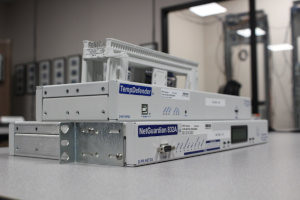
Whether you're new to our equipment or you've used it for years, DPS factory training is the best way to get more from your monitoring.
Reserve Your Seat TodayWhen the power goes out at a remote telecom site, it's tempting to view it as a short-term inconvenience.
The lights go off, so you assume battery backup kicks in and you wait. Then the power comes back, so you move on.
This may seem "simple", but it actually involves a lot of risk.
For telecom professionals and network operators, the real damage of a power outage often happens after power is restored. Without effective power monitoring, you're left exposed to silent failures, unseen damage, and hidden costs that add up quickly - and keep adding up.
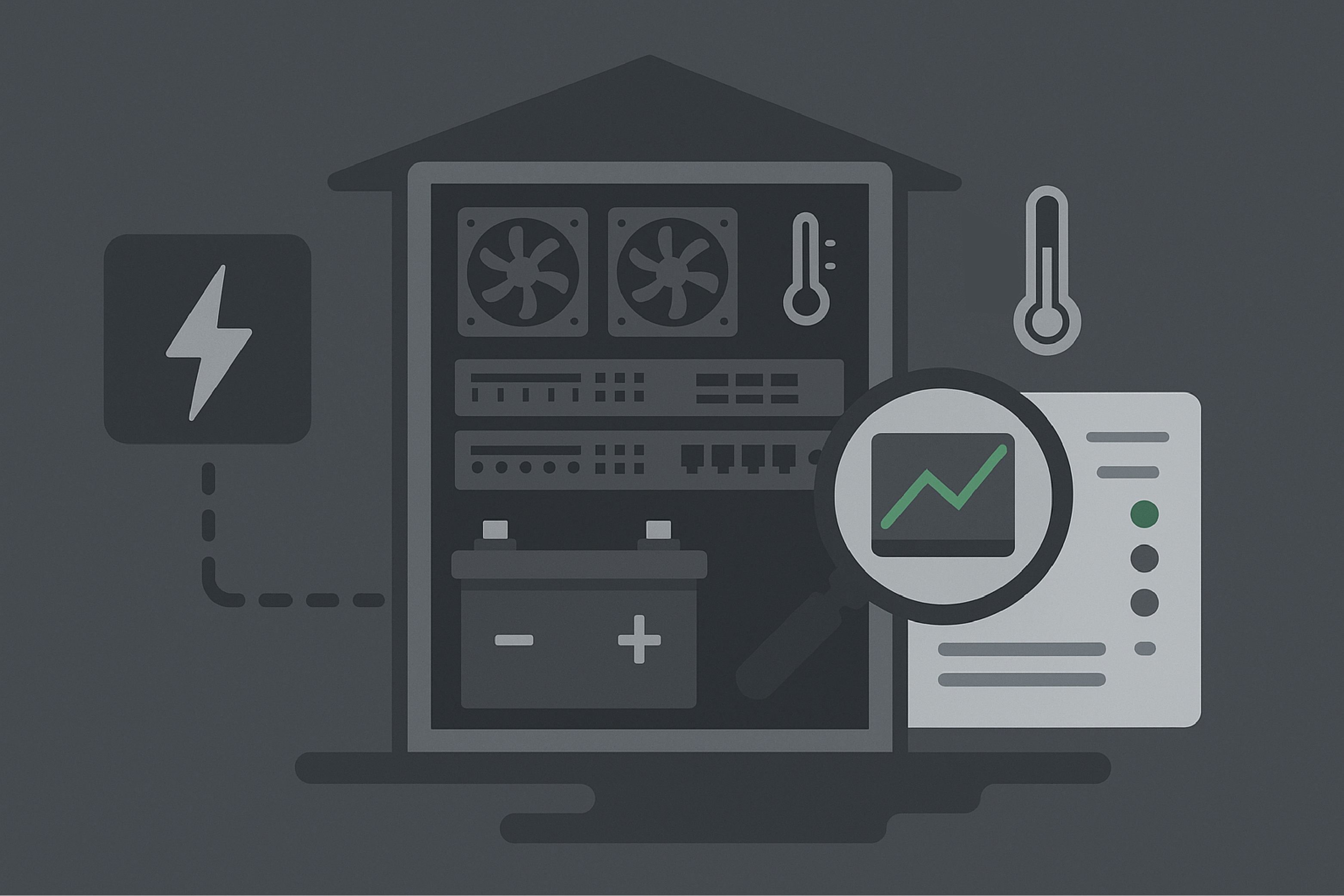
If your remote sites aren't fully monitored, you don't know what you don't know!
You can't tell if your HVAC has failed and your equipment is baking inside a hut. You can't tell if a generator failed to start due to a dead starter battery. You don't know if your backup batteries are dangerously close to total discharge.
The worst part is you won't know you're in trouble until it's already too late.
Sure, you already know that downtime is expensive. But what really happens when the lights go out at your site? And why are so many network operators shocked when they see the actual costs?
Five ways power outages cause unexpected damage include:
Your routers, radios, and switching gear may have DC battery backup power, but do your HVAC units?
Most operators forget this. They assume that, if the network gear itself is up, everything's fine.
But when the A/C stops, heat begins to rise inside your site. Equipment might continue running for a while - until it reaches a thermal threshold and shuts itself down to prevent irreversible damage.
What's worse is: once the environment heats up, you can't restart your gear until the temperature returns to safe operating levels. That means longer recovery times, reduced uptime, and lost revenue even after commercial power is restored.
Most people neglect the fact that telecom batteries aren't designed to run until they're completely drained. Doing that - even once - can reduce their lifespan significantly or destroy them outright.
And it's not just discharge. It's also heat.
If your batteries are subjected to high temperatures - such as, over 122 F - you can take a 10-year-rated lead-acid battery and burn it out in barely over a year.
Multiply that damage across dozens or even hundreds of sites, and you're looking at tens of thousands in avoidable replacement costs.
If you're sending techs out to sites just to check battery levels, inspect generators, or press reset buttons, you're wasting money. Every truck roll costs you time and labor. Every mile driven adds up in expenses.
Worse, most of these visits could be avoided entirely if you had the ability to monitor and control equipment remotely. Unmonitored systems mean sending someone on-site "just in case."
Proper power monitoring means knowing when something is wrong - and dispatching only when absolutely necessary.
When the RTU at your remote site goes dark during a power failure, you lose more than just a signal. You lose total visibility.
That includes:
Losing power without visibility is like flying a plane with no instruments through a storm. You might survive it - but you'll never feel safe doing it.
When you add it all up, a power failure affects your bottom line in four critical ways:
It's not just about a few blinking lights. It's about how power failures affect your revenue, reputation, and resource allocation. And it's 100% preventable with the right monitoring gear.
The good news is you don't have to accept these risks. With a solid power monitoring plan, you can protect your remote sites, reduce expenses, and take control of your network - even during an outage.
At DPS Telecom, we've spent more than 30 years building gear that helps network operators maintain visibility and control when it matters most.
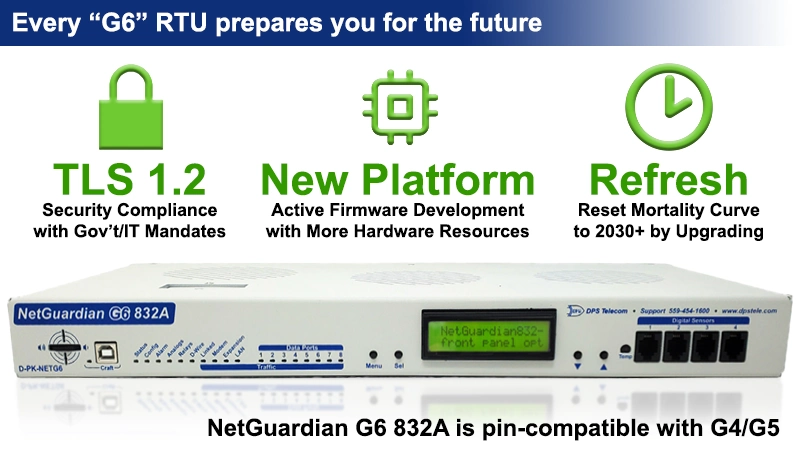
We've evolved to the new G6 NetGuardian RTU series - a line of next-gen monitoring devices that gives you faster processing, stronger security, and future-ready performance.
With a G6 NetGuardian RTU at your site, you can:
And thanks to our "general-purpose" design philosophy, these remotes are not tied to any specific manufacturer. They speak open protocols and integrate with a wide variety of gear.
If you're still using older units or proprietary systems, it's time to upgrade.
Pair your G6 RTUs with the T/Mon LNX alarm master, and you get real-time visibility of your entire network - hundreds of sites, thousands of alarms, one screen.
T/Mon does more than just show you alarms. It gives you control.
With it, you can:
This isn't a closed ecosystem. You can integrate third-party SNMP devices into T/Mon right alongside your DPS RTUs.
When you're equipped with a DPS monitoring system during a power failure, the gear adapts to address the needs of your network. The process typically follows a few steps:
Most remote monitoring vendors build products as a side project. It's just one of their many offerings.
DPS Telecom is different. Remote monitoring and control is all we do (aside from some "stretch" projects from clients who fall in love with our customization ability).
From the first T/Mon in the 90s to today's G6 RTUs, we've continuously improved our gear based on real customer feedback.
That means:
If you want to reduce truck rolls, protect your equipment, and eliminate outage guesswork, we're here to help you build a power monitoring strategy that works.
No setup is perfect. Maybe you've had surprise battery failures. Maybe you've sent techs on preventable truck rolls. Maybe you've had enough downtime to realize: you need visibility.
Let's fix that.
Give us a call at 559-454-1600 or email sales@dpstele.com.
We'll walk you through:
Whether you're retrofitting legacy equipment or building a new site from scratch, we'll help you cover every angle - power, environmental, security, and control.

Andrew Erickson
Andrew Erickson is an Application Engineer at DPS Telecom, a manufacturer of semi-custom remote alarm monitoring systems based in Fresno, California. Andrew brings more than 19 years of experience building site monitoring solutions, developing intuitive user interfaces and documentation, and opt...