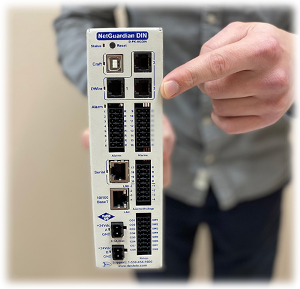
Download our free Monitoring Fundamentals Tutorial.
An introduction to Monitoring Fundamentals strictly from the perspective of telecom network alarm management.
1-800-693-0351
Have a specific question? Ask our team of expert engineers and get a specific answer!
Sign up for the next DPS Factory Training!
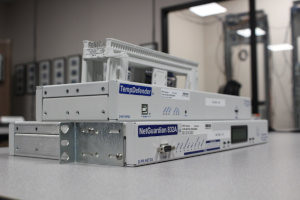
Whether you're new to our equipment or you've used it for years, DPS factory training is the best way to get more from your monitoring.
Reserve Your Seat TodayNebraska Central Telephone Company (NCTC) upgraded its switching infrastructure while also needing more precise alarm visibility for remote cabinets. By deploying DPS Telecom NetGuardian RTUs, the team increased alarm capacity and improved field response with clearer, more detailed notifications.
| Industry | Telecommunications |
|---|---|
| Company | Nebraska Central Telephone Company (NCTC) |
| Services Mentioned | Local telephone service, dial-up and broadband Internet access, PC maintenance, spam filtering |
| Primary Challenge | Remote sites outgrew embedded DMS alarm capacity, and the move to Softswitch would remove embedded alarming entirely |
| Solution Deployed | Dedicated cabinet alarming using DPS Telecom NetGuardian RTUs with discrete and analog monitoring plus local paging/email notifications |
| Key Result | More precise alarms for faster, better-prepared dispatch decisions, supporting lower operating costs and improved service reliability |
| Products and Services Mentioned | NetGuardian RTUs (including NetGuardian-16S), DPS Telecom Factory Training, T/Mon SLIM (considered for future centralized visibility) |
Nebraska Central Telephone Company provides integrated communications services for its customers, including local telephone service, dial-up and broadband Internet access, and additional services such as PC maintenance and spam filtering.
To enhance service quality, NCTC began transitioning its network from DMS equipment to CopperCom's Softswitch technology. That modernization effort also created an opportunity to modernize alarm monitoring that had been tied to legacy switching hardware.
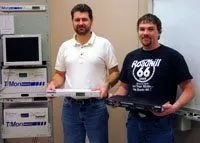
Curt Ritter and Jason DeGroff
Nebraska Central Telephone
Historically, NCTC relied on basic, integrated DMS alarm monitoring capabilities to keep tabs on remote cabinets. Over time, remote sites grew beyond the available alarm capacity, and technicians had only a small number of discrete alarm inputs per site to work with.
As a result, multiple separate alarm conditions were sometimes combined into a single input ("OR-ing" alarms together). This reduced clarity: when an alarm was received, it could not be precisely matched to the actual condition at the site.
That lack of specificity had real operational impact. Technicians could be dispatched to remote locations without knowing exactly what problem they were walking into, increasing the risk of arriving without the right tools or replacement parts.
The capacity issue was significant on its own, but the Softswitch transition introduced a second problem: embedded alarming would be eliminated as the DMS equipment was removed.
NCTC faced a common decision point during major infrastructure modernization: keep a large legacy switch in service just to retain a handful of basic alarm points, or move alarm monitoring to dedicated devices built specifically for remote site visibility.
NCTC chose to cut off the DMS, saving electricity and space, and purchase a new monitoring system. "My manager just couldn't rationalize keeping the DMS in service just for its basic monitoring capabilities," said Jason DeGroff, a Central Office Technician for NCTC.
During the Softswitch transition, NCTC received a practical recommendation. CopperCom integrates the DPS Telecom NetGuardian-16S into its infrastructure solutions and suggested NCTC contact DPS Telecom.
After working with DPS, NCTC purchased its own NetGuardian RTUs to provide dedicated alarming in its cabinets. NetGuardian devices are purpose-built for remote site and cabinet monitoring, helping operations teams expand far beyond limited embedded alarming.
Compared to the basic DMS monitoring NCTC had been using, the deployed NetGuardians provided substantially more alarm capacity and more detail per site, including:
For teams facing similar transitions, DPS Telecom commonly recommends placing NetGuardian RTUs at the cabinet or remote site edge where the alarms originate. This approach preserves monitoring continuity even when switching, routing, or voice platforms evolve.
After installing new NetGuardians, NCTC wanted to ensure it would get the most value from the monitoring investment. Curt Ritter (Network Administrator) and Jason DeGroff (Central Office Technician) attended Factory Training at DPS Headquarters.
NCTC planned to use the stand-alone monitoring capabilities of NetGuardian devices, with a company goal to one day monitor everything in the central office with a NetGuardian. That made training on the Web browser interface, TTY interface, and automatic paging/email configuration especially relevant.
Because NCTC had already installed several NetGuardians at its sites, Ritter and DeGroff arrived with practical experience and were able to ask detailed questions about advanced capabilities and configuration options.
During training, they also saw the versatile and compact T/Mon SLIM master station. In the future, a T/Mon SLIM could poll NCTC's NetGuardians to provide consolidated network visibility on a single screen.
Using dedicated NetGuardian RTUs instead of relying on a simple integrated DMS monitoring system at remote cabinets positioned NCTC to improve service reliability and reduce costs.
With more detailed alarm notifications, technicians can make better decisions before leaving the office. Instead of traveling to a remote cabinet with only a generic alarm indication, staff can better understand which condition triggered and bring the right tools for the job.
Better alarm specificity also supports smarter dispatching. Some minor alarms may not require immediate action, allowing technicians to combine multiple tasks into one trip and reduce overall truck rolls. In regions where snowfall can be heavy, minimizing unnecessary travel helps control costs and reduces wasted time.
"If you have to make a trip out to some of our distant sites, half the day is shot," said Ritter. "Last year, we had to take snowmobiles to get out to some areas. I had to run whole routes by snowmobile to locate problems," added DeGroff. "The NetGuardians are going to be a big help in minimizing that kind of waste."
For telecom teams standardizing alarming across multiple remote locations, DPS Telecom typically recommends pairing NetGuardian RTUs at the edge with a central alarm master when a unified view is required. This architecture makes it easier to scale as additional cabinets and points are added.
These are common questions telecom operators ask when upgrading switching infrastructure and rebuilding alarming around dedicated RTUs.
When alarm inputs and notification logic live inside a legacy switch, removing or replacing that switch can remove alarming at the same time. A dedicated RTU such as a NetGuardian keeps monitoring independent from switching technology choices.
"OR-ing" multiple alarm conditions into one point reduces specificity. The NOC or technician receives an alarm but cannot immediately identify which condition is present, increasing troubleshooting and travel time.
Analog inputs allow teams to track values across a range, not just on/off states. This supports earlier detection and better context when a site is trending toward a fault condition.
Locally originated notifications can reduce time to awareness and maintain alarm delivery paths even when upstream systems or network segments change. NetGuardian RTUs support these types of notification workflows.
If you want a consolidated view of multiple RTUs and sites on a single screen, a T/Mon system can poll RTUs and present network visibility centrally. NCTC saw T/Mon SLIM as a future option for that use case.
Get Visibility of Your Whole Network with DPS Telecom Alarm Monitoring Solutions
No matter what kind of equipment you need to monitor, DPS Telecom can help you design a right-sized alarming solution. For distributed sites and cabinets, start with the NetGuardian RTU family. If you need a small, versatile RTU option, consider the NetGuardian 216. For larger applications, consider a full-function RTU like the NetGuardian 832A. For centralized visibility across many sites, explore a master station such as T/Mon LNX.
Get a Free Consultation to discuss your monitoring requirements, or call DPS at 1-800-693-0351 to speak with an expert about your project.
To receive a price quote or ROI analysis, send an email to sales@dpstele.com or call 1-800-693-0351